
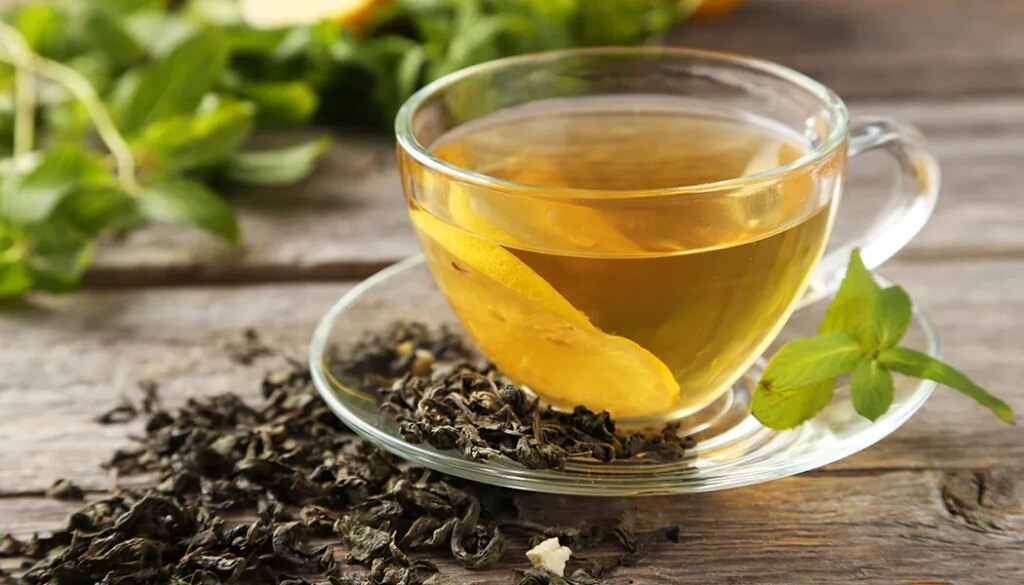
Well, if you\’re reading this, chances are you already know that green tea isn\’t just a basic drink—it\’s practically a wellness ritual wrapped in a mug. But let\’s be real: brewing it properly can feel like an ancient secret nobody bothered to write down. Too hot, and it tastes bitter; too cool, and it just tastes like slightly tinted water.
I know this can be tricky, especially when you\’re trying to figure out if you need Japanese Sencha, a bag from the grocery store, or how to tackle the vibrant green of proper Matcha powder preparation. The good news is that perfecting your cup isn\’t about being a tea master; it\’s about paying attention to three small, but crucial, details.
We’re going to walk through how to skip the bitterness, get the maximum antioxidant capacity, and understand why this one particular brew gives you focused energy instead of the standard caffeine crash.
Key Takeaways
- Understand the focused energy provided by L-Theanine and EGCG.
- Never use boiling water; aim for 170-185°F to prevent bitterness.
- Matcha powder preparation requires sifting and a specific whisking technique to avoid clumps.
- Keep your steeping time short—often under two minutes—to control caffeine content and side effects.
The Magic Behind Green Tea: Why It Works Differently
If you’ve ever had black tea or coffee and noticed that punchy, fast-paced rush followed by a swift slump, you know what a traditional caffeine hit feels like. The cool thing about green tea—which comes from the same plant, Camellia sinensis—is how the processing changes everything. Black tea leaves are oxidized, giving them their dark color and depth. Green tea, however, is not, which allows certain delicate compounds to shine through.
This is where the real science comes in. Green tea is rich in polyphenols, particularly catechins like EGCG (epigallocatechin gallate). The benefits of EGCG in green tea are widely studied for supporting overall health. But the reason we feel so good drinking it is thanks to a compound called L-Theanine.
L-Theanine is an amino acid that works synergistically with caffeine. Instead of a high-speed sprint, L-Theanine helps slow down the absorption of the caffeine, promoting a state of relaxed alertness. It’s the difference between feeling wired and feeling focused.
Stopping the Burn: Finding the Perfect Temperature
This is the single biggest stumbling block for new green tea drinkers. I’ll never forget the first time I enthusiastically brewed a beautiful, expensive Japanese Sencha. I used water straight off the boil, poured it in, and waited three minutes. When I took a sip, it was metallic, acrid, and bitter—I basically threw away $15 worth of leaves.
That smell, metallic and acrid, is the taste of scorched polyphenols.
Green tea leaves are delicate. When you hit them with harsh, boiling water (212°F), you instantly pull out all the bitter tannins before you can enjoy the vegetal, sweet notes. To truly appreciate the subtle flavor profile—like that fresh, grassy note you get in high-quality Sencha—you need restraint.
If you want to enjoy the full potential of your leaves, particularly something delicate like Gyokuro or Sencha, you must drop the temperature.
Pro Tip: Don\’t guess the temperature. If you don\’t own a temperature-controlled kettle, simply boil your water and then let it sit, uncovered, for 2-3 minutes before pouring. You\’re aiming for 170°F to 185°F (76°C to 85°C). This gentle warmth coaxes the sweetness out of the leaves instead of punishing them.
Powder vs. Leaf: Mastering Matcha Powder Preparation
Matcha is essentially powdered green tea, which means when you drink it, you consume the entire leaf—not just the infusion. This provides a much higher concentration of those lovely catechins and L-Theanine. It’s also why good Matcha preparation is a bit different.
Look, I\’ll be the first to admit—the traditional bamboo whisk (chasen) and the requirement to whisk vigorously sometimes feels like an intense arm workout. This is the part I still struggle with sometimes when I’m feeling lazy!
However, the key difference is that Matcha powder preparation is about suspension, not steeping.
If you just dump the powder into hot water and stir with a spoon, you\’ll end up with clumps and grit. The secret to that smooth, almost creamy velvetiness is air incorporation.
Here are the essential steps for a perfect cup:
- Sift your Matcha powder (about 1-2 teaspoons) into your bowl to break up any clumps.
- Add a tiny amount (1/4 cup) of hot, but not boiling, water (around 170°F).
- Use a whisk to mix rapidly in a \”W\” or \”M\” motion until a layer of fine, tiny bubbles forms on the surface.
- Top with more water or steamed milk if you prefer a latte.
Green Tea Side Effects and Jitters: Troubleshooting Caffeine Content
While the L-Theanine does a beautiful job of mitigating the typical caffeine spike, it’s not an excuse to drink an entire pot in an hour. Even though the overall green tea vs black tea caffeine content is usually lower, excessive intake can still cause those unwanted side effects and jitters.
If you’re sensitive to caffeine, pay close attention to two variables: quantity and steep time.
One of the most common mistakes people make is over-steeping the leaves because they think \”more time equals more flavor.\” What you\’re actually doing is drawing out an excess of both tannins (hello, bitterness!) and caffeine.
Keep it quick.
If you’re using tea bags, 60 seconds is usually plenty. If you’re using high-quality loose-leaf, aim for 90 seconds to 2 minutes, depending on the volume.
Selecting the Best Organic Green Tea Brands and Supplements
Because you’re consuming the water-soluble compounds of the tea plant, quality matters immensely. If the plant was sprayed with pesticides or grown in poor soil, those elements are going directly into your mug. That’s why many experienced drinkers look for the best organic green tea brands. Organic certification provides a level of reassurance about the farming methods used.
It also means you’re more likely to experience the full antioxidant capacity of the tea, which is often tied to how well the Camellia sinensis plant was cared for.
When considering green tea extract supplements safety, you need to exercise caution. While supplements offer a concentrated dose of components like EGCG, they bypass the slow, natural delivery system of the brewed drink. Always check with a doctor before adding a highly concentrated supplement to your routine, as very high doses can be taxing on the body. You can learn more about the complexities of EGCG metabolism through reliable resources like the NIH (National Institutes of Health research).
Ultimately, your simplest and safest path to enjoying the benefits is through the leaf itself. Stick to whole-leaf, properly brewed tea. It’s satisfying, calming, and it just plain tastes better.
So, now that you know the secrets—which subtle flavor profile, Japanese Sencha or perhaps a smoky Chinese Gunpowder, are you going to brew perfectly this afternoon?


Leave a Reply